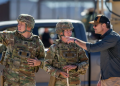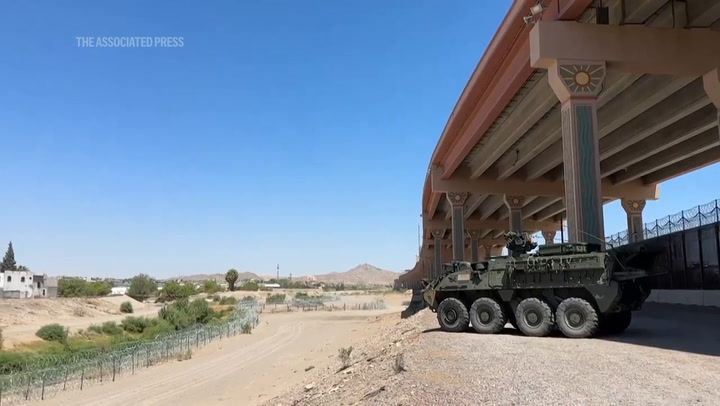
The U.S. military is expanding its enforcement presence along the southern border, designating large swaths of land as militarized zones where troops have the authority to detain individuals crossing illegally.
These designated militarized zones — which will soon span nearly one-third of the U.S.-Mexico border — operate under the supervision of nearby military bases. So far, more than 1,400 people have faced criminal trespassing charges for entering these areas, increasing legal consequences for undocumented migrants.
Related posts
This Article Includes
- 1 Related posts
- 2 Receptionist Blows $400K ‘Bonus’ She Was Accidentally Paid on $60K Salary – Now Faces Theft and Money Laundering Charges
- 3 Russia in Panic as Explosions Hit Critical Military Pipelines in the Far East
- 4 Community Reactions Mixed
- 5 Massive Expansion of Military Zones
- 6 Legal Challenges Begin
- 7 Border Arrests at Historic Lows


Community Reactions Mixed
In Luna County, New Mexico, a region with deep-rooted values of individual freedom, reactions are divided. Some residents, including farmers and ranchers, support the increased security. Others — especially hunters, hikers, civil rights groups, and immigrant advocates — express concern over access to public land and the human impact of the new policy.
“People are coming into our country to work, stepping now all of a sudden into a military zone, and they have no idea,” said Luna County Commissioner Ray Trejo, who also raised concerns about hunting rights and the use of firearms on newly restricted land.
Abbey Carpenter, who leads a migrant search-and-rescue group, fears the restricted access will prevent life-saving interventions.
“Maybe there are more deaths, but we don’t know,” she said, referring to the harsh desert conditions where many migrants perish.
Massive Expansion of Military Zones
The first two zones, rolled out in April and May, stretch across 230 miles of border territory — from Fort Hancock, Texas, through El Paso and westward, surrounding the village of Columbus, New Mexico. The Army has posted thousands of no-entry signs, declaring these areas off-limits under military authority.
Recently, the Defense Department added a 250-mile militarized zone in Texas’ Rio Grande Valley, and plans are underway for another near Yuma, Arizona. Altogether, the four zones will soon span nearly one-third of the entire southern border.
Local farmer James Johnson, whose land borders the militarized area, supports the policy.
“Previous deployments gave us ‘eyes and ears’ on the border,” he said. “This new approach is trying to give some teeth to enforcement.”
Legal Challenges Begin
The expansion stems from President Donald Trump’s declaration of a national emergency on the border on his first day back in office in 2025. But legal pushback is already underway.
In Las Cruces, New Mexico, federal court proceedings have produced mixed results. A 29-year-old Guatemalan woman — arrested under military trespassing charges — had those charges dismissed for lack of evidence but still received two weeks in jail for illegal entry.
In another case, a public defender’s office is challenging the military’s authority to control public land without Congressional approval, calling it a “staggering and unprecedented” overreach. A judge has yet to rule.
Border Arrests at Historic Lows
Despite the military expansion, border arrests have dropped to their lowest level since 1966. On June 28, only 137 arrests were made — a dramatic contrast to late 2023, when daily arrests surpassed 10,000.
This decline began before Trump’s presidency, following Biden’s 2024 asylum restrictions and Mexico’s ramped-up enforcement in late 2023. As of now, at least 7,600 active-duty personnel are deployed along the U.S.-Mexico border, forming one of the largest military footprints in the region’s history.