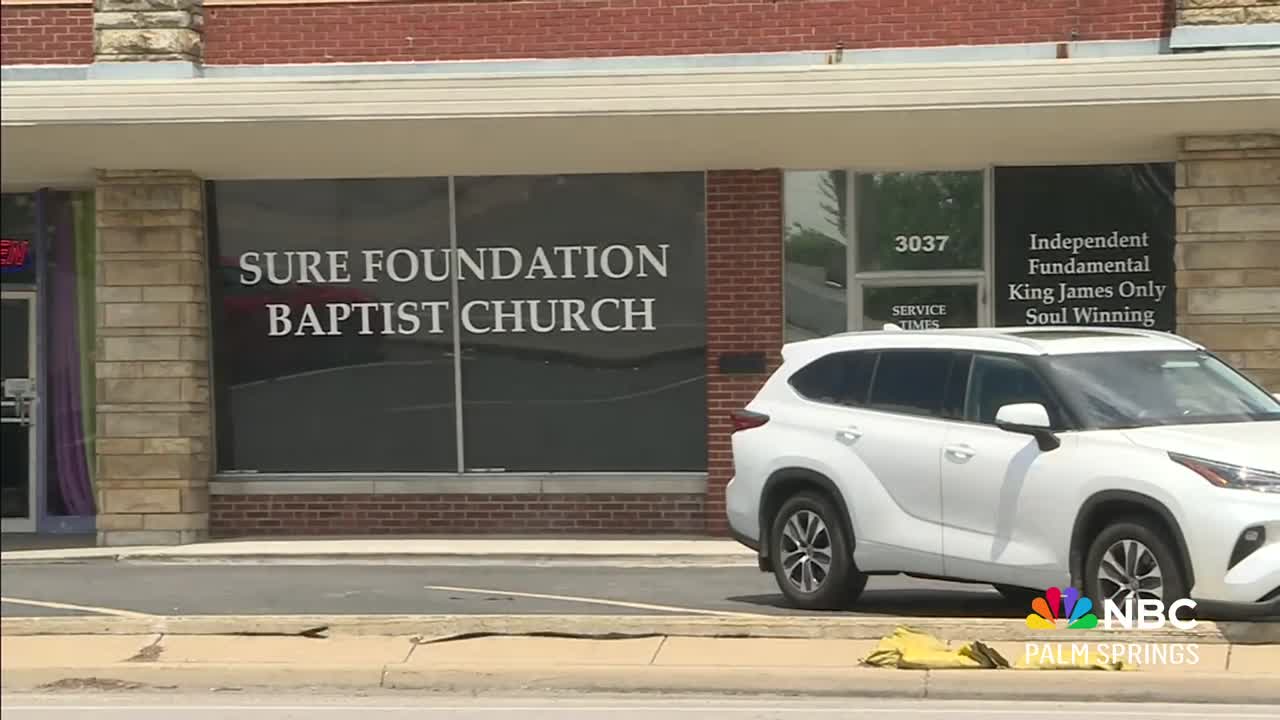
A sermon delivered at the Fundamental Baptist Church in Indiana during “Men’s Preaching Night” has sparked widespread outrage after a guest speaker, Steven Falco, made inflammatory remarks calling for death and violence against the LGBTQ+ community. The sermon, which was broadcast live on Facebook, has drawn sharp criticism from faith leaders, activists, and concerned citizens alike.
Falco’s sermon included repeated hateful rhetoric, referring to queer individuals as “disgusting” and advocating for their punishment through violent means. In response to backlash, the church issued a statement claiming Falco was referencing capital punishment by the government, not encouraging vigilante violence. “They are supposed to be executed by the government,” the church said, citing scripture.
Related posts
This Article Includes
- 1 Related posts
- 2 Receptionist Blows $400K ‘Bonus’ She Was Accidentally Paid on $60K Salary – Now Faces Theft and Money Laundering Charges
- 3 Russia in Panic as Explosions Hit Critical Military Pipelines in the Far East
- 4 Community and Faith Leaders Speak Out
- 5 Extremism on the Rise
- 6 Real-World Consequences


Community and Faith Leaders Speak Out
Local mother Allie Klausen voiced concern about the harmful impact of such messages on young minds. “When we’re teaching them through hate and disguising it through scripture, what we’re doing is abusing them invisibly,” she said.
The Concerned Clergy of Indianapolis strongly condemned the sermon, labeling it “theologically irresponsible and pastorally dangerous.” In their statement, they reaffirmed their unwavering support for the dignity and inclusion of LGBTQ+ individuals.
Extremism on the Rise
Eric Skwarczynski, host of the podcast Preacher Boys and a former fundamentalist church member, said the rhetoric is not new but is becoming more public and extreme.
“Growing up, I often heard people say they’d rather their child be dead than gay,” he explained. “Now the language is becoming more literal and public. Each generation in these churches is pushing for more extreme views.”
Skwarczynski links the rise of this rhetoric to Christian nationalism, warning that what was once whispered behind closed doors is now being “broadcast to the world.”
Real-World Consequences
Critics warn that using religious language to justify violent ideology doesn’t just offend — it fuels real harm. From mental health consequences to physical violence, the impact of hateful sermons can ripple far beyond the church walls.
The sermon remains online, but many are calling for its removal and for greater accountability. As calls grow for condemnation across faith and political lines, the incident serves as a stark reminder of the dangers of mixing hate speech with religious doctrine.